MRI (Magnetic Resonance Imaging), one of the most advanced and sophisticated radiological methods used in medical diagnosis, creates images by using natural parameters in the human body. MRI devices consist of machines with magnetic field strengths ranging between 0.2 and 3 Tesla MRI.
NPİSTANBUL Hospital offers high image quality and patient comfort with its wide magnet (70 cm) 3 Tesla MRI scanner, which is found in only a few centers in our country. Thus, detailed images are obtained.
3 Tesla Technology is designed to obtain images with high resolution and sharpness. The magnet forms the basis of the MRI system, and systems with a 3 Tesla magnetic field strength enhance doctors' diagnostic capabilities while allowing patients to experience a faster and more detailed examination.
Advantages of 3 Tesla MRI
- The width of the device interior increases the patient's compliance and comfort during the MRI scan. It makes it possible for patients with claustrophobia and extreme obesity to undergo an MRI scan.
- One of the most important factors affecting patient comfort in 3T devices is the high noise level generated during the examination. Some patients can be very disturbed by this. The 3T device features a noise-reduction technique that can reduce the sound heard by the patient by up to 40 percent.
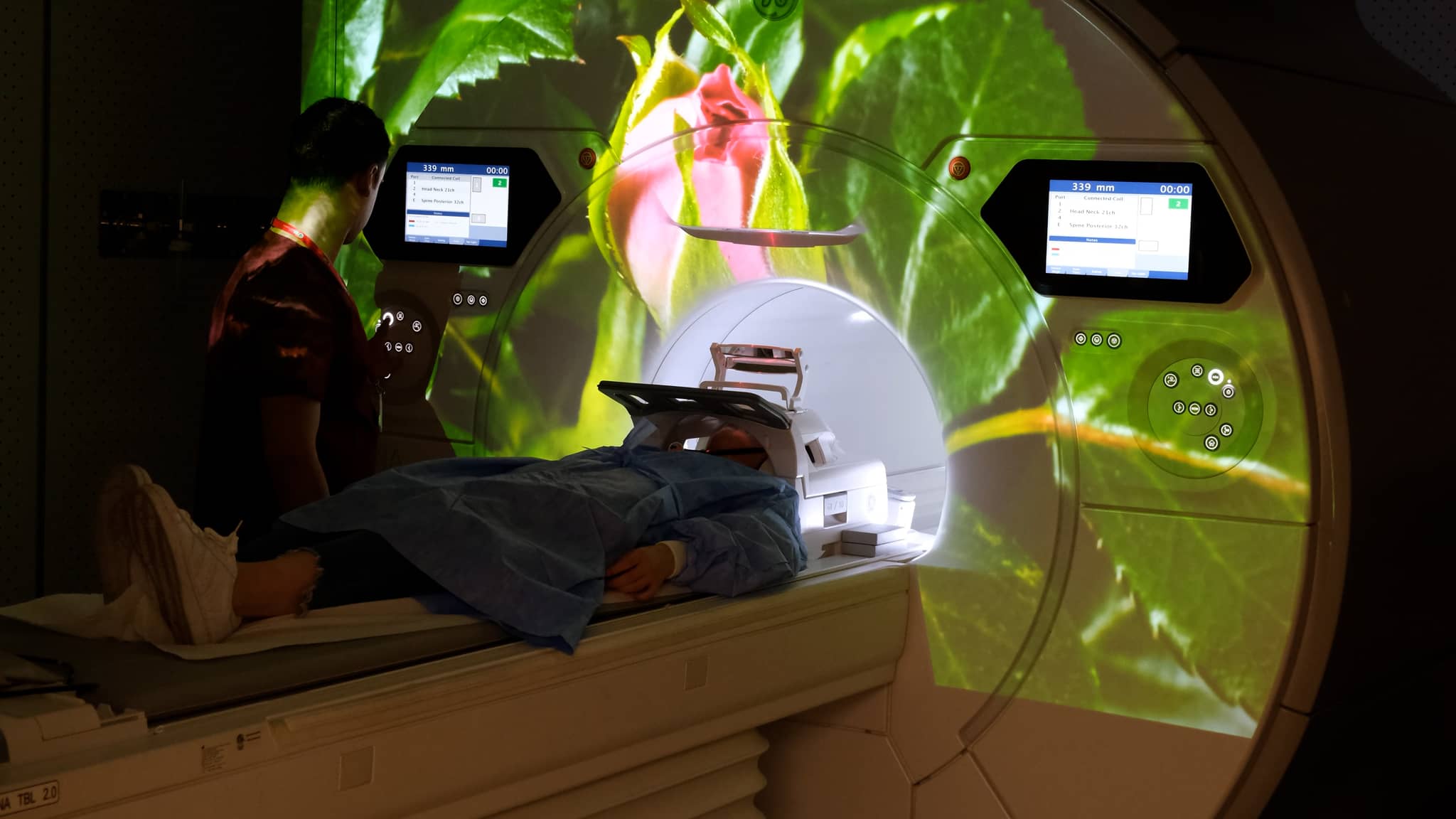
- There is also a music system and video broadcast to ensure that patients spend their time pleasantly during the examination.
- Thanks to the program that prevents image distortion caused by movement, as well as MR-compatible metal prostheses and implants on the body, image quality is high in all scans.
- It represents a special approach that allows pediatric patients to feel more comfortable and peaceful during a Magnetic Resonance (MR) scan. This experience aims to provide children with an easier scanning process in cases of claustrophobia or anxiety. This special design aims to distract and calm children by using factors such as external and internal ambiance effects, special images, and music. For example, the child's attention can be diverted away from the scanning process by using colored lights or pleasant landscape images. In addition, scanning with soft music can help children calm down.
- Among the application methods for individuals with special needs, scans under sedation anesthesia are performed safely.
What is the Application Process of 3 Tesla MRI?
- Before the procedure, the patient must not have any metal on them such as necklaces, earrings, watches, or rings. The team first asks the patient to remove all metals on their person.
- The patient lies down on the MRI device, and the lying position is demonstrated to the patient by the team according to the region to be imaged.
- The patient hears and follows the necessary instructions during the procedure through the headphones placed in their ears. The headphones also allow the patient to be less affected by the noise of the device.
- There is a button in the patient's hand so that they can quickly call the team in the event of any problem.
- The scan duration varies depending on the region to be imaged and the type of disease.
What Are the Fields of Application of 3 Tesla MRI?
3 Tesla MRI can be applied for imaging organs and systems in different regions of the body. 3 Tesla MRI is utilized for detecting brain tumors, epilepsy, spinal cord diseases, neurological disorders such as migraines, ear disorders, jaw problems, spine diseases, prostate diseases, breast diseases, imaging of joints and connective tissue such as shoulders and knees, as well as many bone-related issues, imaging of the coronary vessels supplying the heart, and whole-body imaging.
When and Why Is It Ordered?
MRI, which is one of the advanced radiological examinations playing a leading role in diagnosing diseases, is ordered in cases where other radiological modalities are insufficient for diagnosis or in the presence of findings where the patient's clinical condition cannot be explained.
MRI is also among the first-requested tests in the evaluation of many organs, such as the brain, which cannot be shown on direct radiographs. Computed Tomography provides more successful images in evaluating bony structures, while MRI is more successful in showing soft tissues.
- Advanced Imaging Techniques
- Advanced MRI imaging
- Virtual colonoscopy
- MR-enterography
- Multiparametric prostate MRI
- MR-fistulography
- Functional MRI
- MRI spectroscopy (Multivoxel, single voxel, and 3D voxel)
- Diffusion tensor imaging (DTI)
- MRI perfusion
- MRI cisternography
- MRI arthroscopy,
- Cartilage T2 mapping imaging examinations
Furthermore, in the Radiology Clinic of NP ISTANBUL Hospital, color mapping and examination from different angles can be performed thanks to the latest technological computer programs.


