
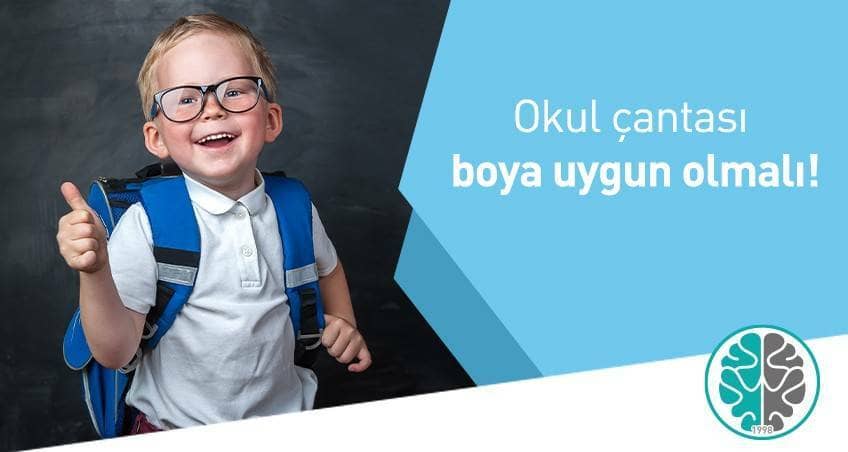
School backpacks should be the right size!
With just a few days left before schools open, experts are warning against heavy backpacks. Improper use of a backpack and carrying a heavy load can lead to shoulder, neck, and back pain, as well as numbness in the arms and hands. According to experts, it is important to choose a backpack that fits the child’s height. Heavier items should be placed closer to the back, and lighter items should be placed in the front pockets. When carrying the backpack, both shoulder straps must be used.
Prof. Dr. Mehmet Kerem Canbora, an Orthopedics and Traumatology Specialist at Üsküdar University NPİSTANBUL Hospital, issued warnings regarding what to consider when selecting a school backpack.
Heavy backpacks cause shoulder and back pain
Noting that various problems can arise from the improper use of school backpacks, Prof. Dr. Mehmet Kerem Canbora stated, “School backpacks are designed to help children carry the weight of their school supplies more easily. They do this by bringing the load closer to the body’s center of gravity and distributing the weight evenly across the shoulders and spine. “Various problems can arise from the improper use of school backpacks and overloading them beyond what is necessary. Shoulder and back pain, as well as numbness in the arms and hands, are among the most common of these. In particular, failure to properly adjust the backpack’s shoulder straps and using the straps on only one side can lead to postural abnormalities in the spine,” he warned.
A heavy school backpack does not cause stunted growth
Prof. Dr. Mehmet Kerem Canbora pointed out that it is a common misconception in society that a heavy school backpack causes scoliosis—a curvature of the spine—or stunted growth, and clarified that these claims are untrue. “There is no scientific study showing that a heavy school backpack causes scoliosis or stunted growth in children,” he said. “However, children who constantly carry heavy school backpacks may experience pain in their shoulders, neck, back, and legs. When carrying a heavy backpack, a child’s center of gravity shifts, making them more susceptible to injuries from falls,” he said.
Heavy items should be placed close to the back
Emphasizing that the weight of a school backpack should not exceed 15 percent of the child’s body weight, Prof. Dr. Mehmet Kerem Canbora said, “To ensure this, unnecessary items should be removed from the backpack. To make carrying easier, heavier items should be placed closer to the back, while lighter items should be placed in the front pockets of the backpack. “Both shoulder straps should be worn when carrying the backpack. The length of the shoulder straps should be adjusted so that the backpack sits snugly against the back without squeezing the shoulders too tightly,” he said.
What should an ideal school backpack be like?
Prof. Dr. Mehmet Kerem Canbora described the ideal school backpack as follows:
First of all, it should be the right size for the child’s age and height. Backpacks that are too large will not only add extra weight themselves but also make carrying the backpack more difficult due to the random movement of items inside and the backpack sagging downward. Small backpacks’ shoulder straps can squeeze the arms, causing numbness and tingling. Additionally, since they won’t sit properly against the child’s lower back, they can cause back pain.
- It must have dual shoulder straps.
- The shoulder straps should be thick and padded with sufficiently soft material in areas where pressure is applied.
- If possible, it should have a waist strap to distribute the weight more evenly and ensure a snug fit around the waist.
- There should
be adequate support for the back and waist. - Backpacks should be checked every day
Prof. Dr. Mehmet Kerem Canbora emphasized that parents should check their child’s backpack every morning and intervene to reduce its contents if necessary, stating, “They should especially ask their children about any occasional neck, shoulder, back, or lower back pain and consult a specialist if needed.”