
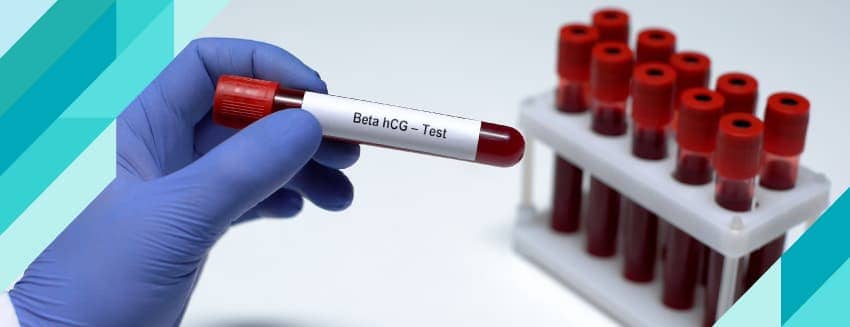
Beta HCG, well known to those planning a pregnancy, is a type of hormone known as human chorionic gonadotropin. This hormone, which enables the rapid diagnosis of pregnancy, is measured in blood tests performed in hospitals as part of pregnancy testing and in at-home urine tests; it is also commonly referred to as the “pregnancy hormone.” Although it is associated with pregnancy, its levels may sometimes rise due to various medical conditions. For this reason, individuals with elevated Beta HCG levels require further detailed examination and monitoring to determine whether a pregnancy is present.
Beta HCG is the beta subtype of human chorionic gonadotropin (hCG), which has two subtypes: alpha and beta. Because HCG levels rise significantly even at the earliest stages of pregnancy, it is one of the most commonly used parameters in pregnancy tests. The test can be easily performed on both blood and urine samples. Blood tests provide results more quickly and with greater accuracy compared to urine tests. Blood tests deliver clear results in a very short time and can be purchased at pharmacies without a prescription. Pregnancy tests can also be performed using a simple urine test. However, since these urine-based tests can be easily influenced by various factors—such as fluid loss or the time of day the test is administered—their reliability is significantly lower compared to blood tests. Additionally, blood tests can detect increases in HCG hormone levels that are still too low to be detected by urine tests. This hormone begins to be secreted by placental cells once fertilization occurs and pregnancy begins. The placenta is the structure that allows the fertilized egg to attach to the uterine wall and facilitates the exchange of blood between the baby and the mother throughout the pregnancy. The HCG hormone secreted by the placenta can be detected in the bloodstream 12 days after fertilization and, a few days later, in a simple urine test. Elevated levels detected in blood tests can provide specific information about how long the pregnancy has been underway.
How Is the Beta HCG Test Performed?
The beta HCG test is performed through a simple blood test, and while results may vary depending on the laboratory, they are generally available on the same day. If no other tests are required in addition to the beta HCG test, a single tube of blood is sufficient. There are no specific precautions the individual needs to take before the blood test. The test can be performed at any time of day. To draw the blood sample, healthcare professionals first place an elastic band around the upper arm to make the veins more visible. The upper arm is then cleaned with alcohol, and the blood sample is drawn using a needle. To prevent swelling, bruising, and bleeding, apply pressure to the puncture site with a clean cotton ball for 15 minutes after the procedure. You can find out when your results will be available at the location where you provided the blood sample; after receiving your results, you can visit a specialist to have them reviewed.
What Is Low Beta-hCG?
If the beta hCG hormone—which should increase during a normal pregnancy—is low, this may indicate a miscarriage, especially in the early stages of pregnancy. Additionally, it may pose a risk of ectopic pregnancy. If low beta hCG levels are detected, this indicates a significant risk of miscarriage or ectopic pregnancy in the man.
What Is High Beta HCG?
The most common cause of high beta HCG levels is pregnancy. However, elevated hormone levels alone are not sufficient to diagnose a healthy pregnancy. If blood test results show levels above 10 mIU/mL, the most appropriate course of action is to repeat the test after 48–72 hours. In individuals whose gestational age has been determined, there may be several reasons why hormone levels exceed the expected Beta HCG range for that week. The most common of these include incorrect calculation of gestational age, as well as conditions such as molar and multiple pregnancies. In pregnant individuals, hormone levels should be monitored regularly within the ranges specified by the specialist; the gestational sac becomes visible on ultrasound after the 4th or 5th week of pregnancy. Alongside high HCG levels, some individuals may also experience low beta-hCG levels. In non-pregnant individuals, hormone levels are expected to be 0 or close to 0. In individuals with suspected pregnancy, causes of low beta-hCG levels may include ectopic pregnancy, incorrect calculation of the gestational age, or unexpected miscarriages. Further diagnostic tests to analyze these conditions are performed by a specialist.
What Factors Affect Beta HCG Levels?
Those who test positive for beta HCG are highly likely to be pregnant. While it is possible to obtain inaccurate results with urine tests, this is quite rare with blood tests. Certain types of cancer, such as prostate cancer, as well as miscarriages that occur at stages too early to be detected as a pregnancy, can also lead to false-positive test results. Some medications used to treat infertility may contain the beta-hCG hormone. In individuals taking these medications, slightly elevated levels of this hormone may not indicate pregnancy. In addition to all this, certain antibiotics, birth control pills, and hormone-containing medications can also affect beta-hCG levels; therefore, individuals must provide detailed information to the relevant specialist—including whether they are undergoing infertility treatment and the medications they are taking—before taking a pregnancy test. In pregnancies that end in miscarriage, beta-hCG levels generally return to normal within four to six weeks. This timeframe may be longer or shorter if the pregnancy was terminated via abortion. Following a miscarriage or the termination of a pregnancy, whether this hormone has returned to its previous level can be monitored at specific intervals. Once a pregnancy is confirmed, there is no need for continuous monitoring of hormone levels unless there is a specific risk of miscarriage or other complications.
Beta HCG Levels in Ectopic Pregnancy
If the beta hCG hormone level is in the range of 1,000–2,000 mIU/mL, the gestational sac should be visible within the uterus via transvaginal ultrasound. In beta hCG tests performed every two days, a lack of an increase of 65% or more in levels is interpreted as an ectopic pregnancy.
Beta HCG Test After IVF
To determine whether pregnancy has occurred following IVF treatment, the test must be performed at the appropriate time. At this stage, the body must be given sufficient time to produce enough HCG hormone.
In IVF treatment, HCG hormone levels are measured in blood samples taken from the mother twelve days after embryo transfer. During this test, the cells in the placenta located inside the mother’s uterus secrete the HCG hormone, and the test checks whether this level has increased in the blood.
Pregnancy hormones first appear in the blood. For this reason, a blood pregnancy test provides the most accurate result. The HCG level measured in the blood rises at a controlled and appropriate rate from the very beginning of pregnancy. HCG levels increase week by week. This phase begins when the embryo implants, whether in IVF or a natural pregnancy.
Calculating Beta HCG by Gestational Week
Beta HCG is referred to as the pregnancy hormone. The level of this hormone in the blood rises rapidly once the embryo implants in the uterus. Once a certain threshold level is reached, it can also be detected in urine. It can be detected in blood around day 11 and in urine between days 12 and 14. Blood B-HCG levels double every 48–72 hours. It reaches its peak level between the 8th and 11th weeks of pregnancy.
This increase in levels is crucial for confirming the continuation of the pregnancy. While measuring the B-HCG level in the blood serves as an indicator of pregnancy, using this value to calculate the gestational age is generally not recommended. This is because these levels can vary significantly among pregnant women, even at the same gestational age.
Do Beta-hCG Levels Rise in Men?
In the presence of various tumors—such as those associated with ovarian, testicular, lung, or breast cancer—that can produce the beta-hCG hormone, beta-hCG levels in the blood rise. This condition can also be detected in men with certain types of testicular cancer. In other words, elevated beta-hCG levels in men may indicate a serious medical condition.
How Is a Home Beta-hCG Test Performed?
There are many types of pregnancy tests. Generally, these tests require him to place a test strip at the end of the urine stream or dip the strip into a container of urine for five to ten seconds. After a short time, the strip displays the test results. These results are usually displayed on the test strip or its display screen as a minus or plus sign, a single or double line, a color change, or the words “pregnant” or “not pregnant.” Not all tests are used the same way; usage instructions may vary from test to test. Be sure to carefully read the instructions before taking the test.